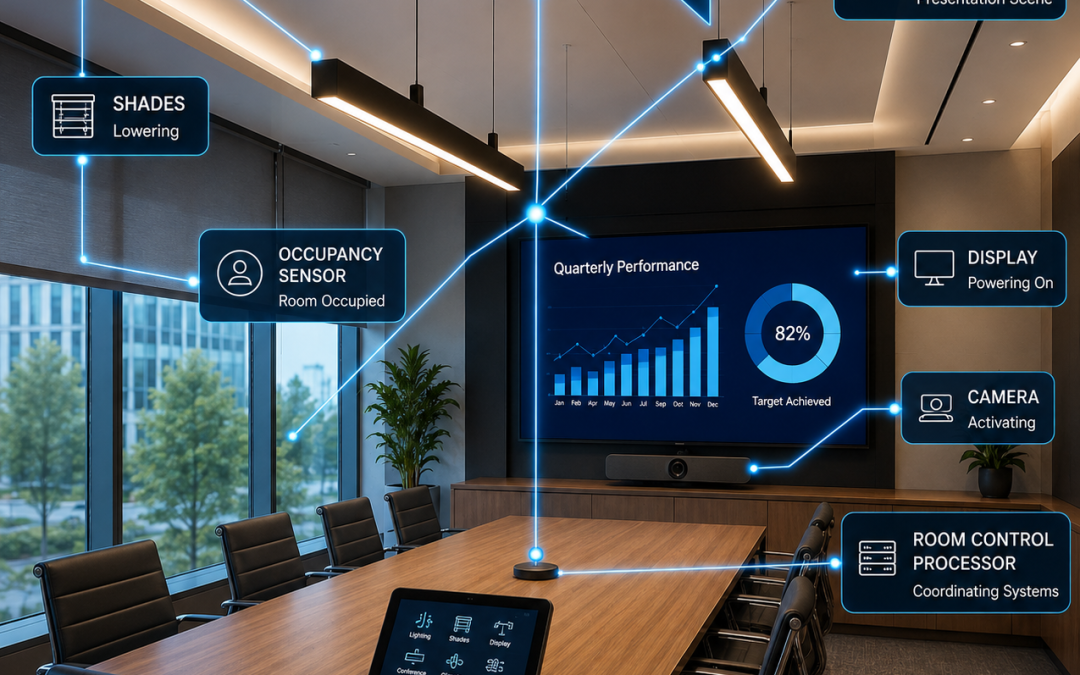
Imagine walking into a conference room and simply saying, “Set the room up for our presentation.” Within moments, the lighting, shades, and connected building systems adjust automatically; no keypads, apps, or manual programming required.
This is the power of AI-driven lighting controls.
Modern AI systems can interpret natural language, understand user intent, validate requests, and coordinate multiple building systems behind the scenes. Rather than replacing existing lighting infrastructure, AI acts as an intelligent layer that enhances how buildings respond to occupants’ needs. That philosophy drives platforms such as unRAVL AI.
Key benefits include:
- Natural language control for a more intuitive user experience
- Integration with lighting, automation, and building management systems
- Built-in validation to ensure safe and approved system operation
- Continuous learning that adapts to user preferences over time
- Flexible deployment through edge or cloud-based AI architectures
As AI technology evolves, the role of lighting integrators becomes even more valuable – designing intelligent systems, managing permissions, and ensuring seamless communication between devices.
At the end of the day, the goal remains simple: create spaces that work for people, allowing them to focus on their work, meetings, learning, or experiences while technology quietly handles the complexity in the background.
– Dan Litvin (August 10, 2026)
Read the full publication on EdisonReport.
Media Contact
Melissa Chen | Marketing Specialist
(973) 915-3133